
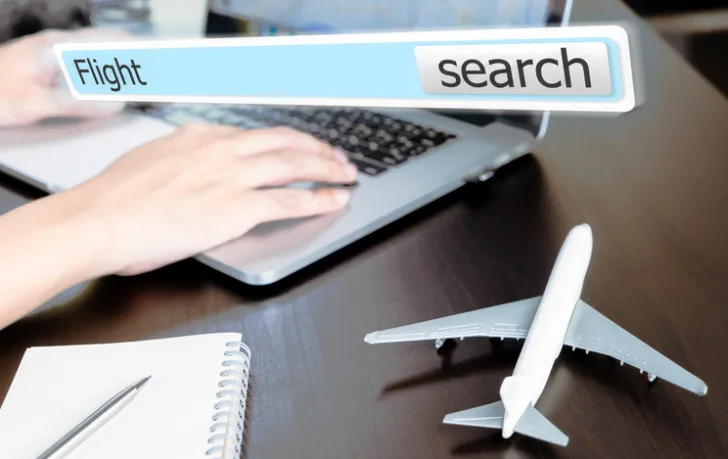
You search a flight in the morning, come back that evening, and the price has jumped. It feels like the airline is watching you specifically. The honest answer is more complicated than a simple yes or no, and it’s worth understanding both sides.
What the evidence actually shows
The strongest evidence points against personal tracking being the cause. A 2016 Consumer Reports study tested 372 flight searches comparing incognito and regular browsers and found no consistent price difference tied to browsing mode. Major airlines have stated publicly that they do not raise individual fares based on one person’s search history, and most independent analyses from 2026 reach the same conclusion: there’s no credible data showing that repeatedly searching pushes your specific price higher.
That said, some industry commentary and a handful of studies do claim a link between repeated searches from the same device and rising fares, attributing it to dynamic pricing systems interpreting frequent searches as high purchase intent. The evidence for this is weaker and less consistently reproduced than the evidence against it, but it hasn’t been fully ruled out either.
What’s almost certainly actually happening
Airline pricing changes constantly, for reasons that have nothing to do with any individual searcher:
Seats sell in tiers. An aircraft has a limited number of seats at each price point. When the cheapest tier sells out — to anyone, anywhere, not you specifically — the price shown to everyone rises to the next tier.
Demand shifts by the hour. Airline pricing algorithms respond to aggregate booking activity across all customers, adjusting fares based on overall demand signals, not one person’s browsing pattern.
Time of day and day of week matter. Fares genuinely fluctuate based on when in the booking cycle you’re looking, independent of anything you’ve done.
In other words, if you check a flight twice and it’s more expensive the second time, the most likely explanation is that someone else booked one of the cheap seats in between — not that the system remembered you.
Why the myth persists
It persists because the pattern it describes is real — prices do rise the more you check — even though the proposed cause is probably wrong. Correlation without the right explanation is exactly how myths like this take hold. You checked, the price went up, so the checking feels like the cause, even when a hundred other bookings happened in the meantime.
Should you still search in private browsing?
Yes, and the reasoning holds regardless of which side of the debate turns out to be right.
Private browsing costs nothing, takes no extra time, and removes cookies as a variable entirely. If cookie-based tracking genuinely plays no role, you’ve lost nothing. If it does play some role, you’ve protected yourself. There’s no version of this where searching privately makes things worse.
What actually helps, regardless of the myth
Set a price alert instead of manually re-checking. It removes the need for repeated searches entirely and gives you an objective record of how the price has moved.
Compare across multiple booking platforms rather than refreshing the same one repeatedly. Different platforms show different inventory and pricing at different moments.
Use a flexible date search so you’re comparing a range of days rather than fixating on one date and one price.
Book once you’re satisfied rather than continuing to search after finding a fare you’re happy with. Prices in tiered pricing systems are more likely to rise than fall as time passes and seats sell.
Frequently asked questions
Do flight prices really go up if you search too many times?
The strongest evidence says no — there’s no credible proof that airlines track individual searches and raise your personal fare. Prices do rise over time, but that’s dynamic pricing responding to overall demand and seat availability, not your specific search history.
Does private browsing actually lower flight prices?
Not necessarily, but it removes cookie-based tracking as a possible factor at no cost to you. It’s a reasonable precaution even though the underlying myth is likely overstated.
Why did the price change between my searches?
Most likely because the cheapest available seats sold to someone else, or the airline’s pricing algorithm adjusted based on overall demand. It’s rarely a response to your individual browsing.
Is it better to book immediately or keep checking?
If you’ve found a fare within your budget on dates that work, booking is usually the safer choice. Continuing to search doesn’t reliably produce a lower price and risks the fare rising in the meantime as seats sell.
Do different devices show different prices for the same flight?
Occasionally, though this is more often linked to location, currency settings or app-specific pricing than to which specific device you’re using. If you suspect this, compare from a different location or currency setting rather than a different device.
Compare fares with confidence
Search hundreds of airlines at once and set a price alert instead of manually rechecking — it does the monitoring for you with none of the guesswork.